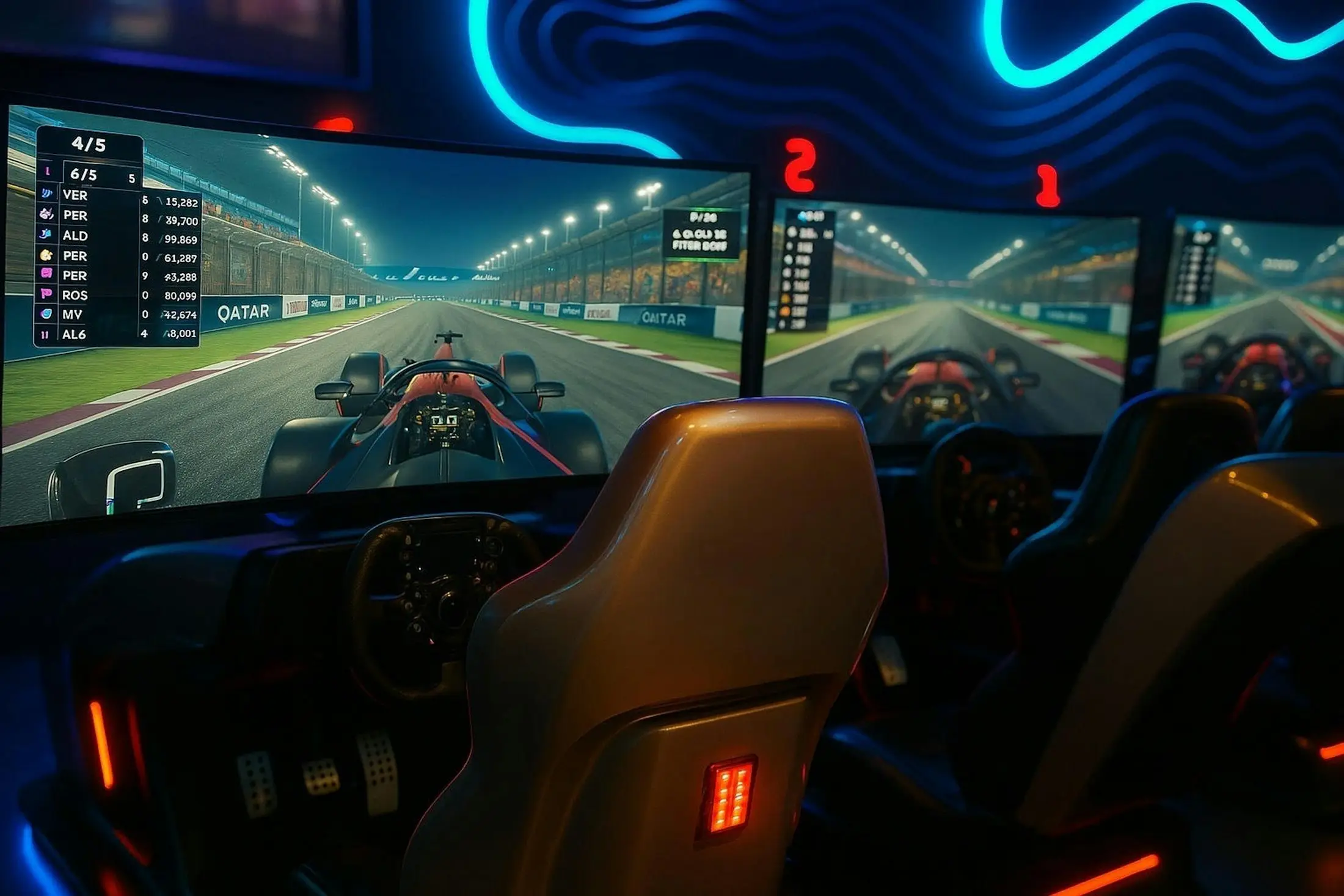
What sim racing gear should you buy?
Pick the kind of driver you are. We'll show you the wheel base, pedals, rig and screen that make sense at that level, and roughly what it costs.
Buying guides
-
Starter
How to start sim racing
What to buy, PC or console, which sim to play and what to upgrade first.
-
All levels
Best direct drive wheel bases in 2026
From 5 Nm starter bases to 25 Nm pro units, with UK prices and a torque guide.
-
Starter
Sim racing pedals explained
Potentiometer, hall effect, load cell and hydraulic pedals, and why the brake matters most.
-
All levels
Best sim racing cockpits and rigs
Foldable seats to aluminium profile rigs, with UK prices and how much rigidity you need.
-
Club racer
Triple screens vs ultrawide vs VR
Field of view, GPU load, space and cost compared.
-
All levels
What PC do you need for sim racing?
CPU, GPU and RAM for a single screen, triples and VR.
-
Club racer
Dashboards, button boxes and accessories
SimHub, shift lights, shifters, handbrakes, bass shakers and motion.
-
All levels
Sim racing questions, answered
Over 200 short answers to the things sim racers ask most.
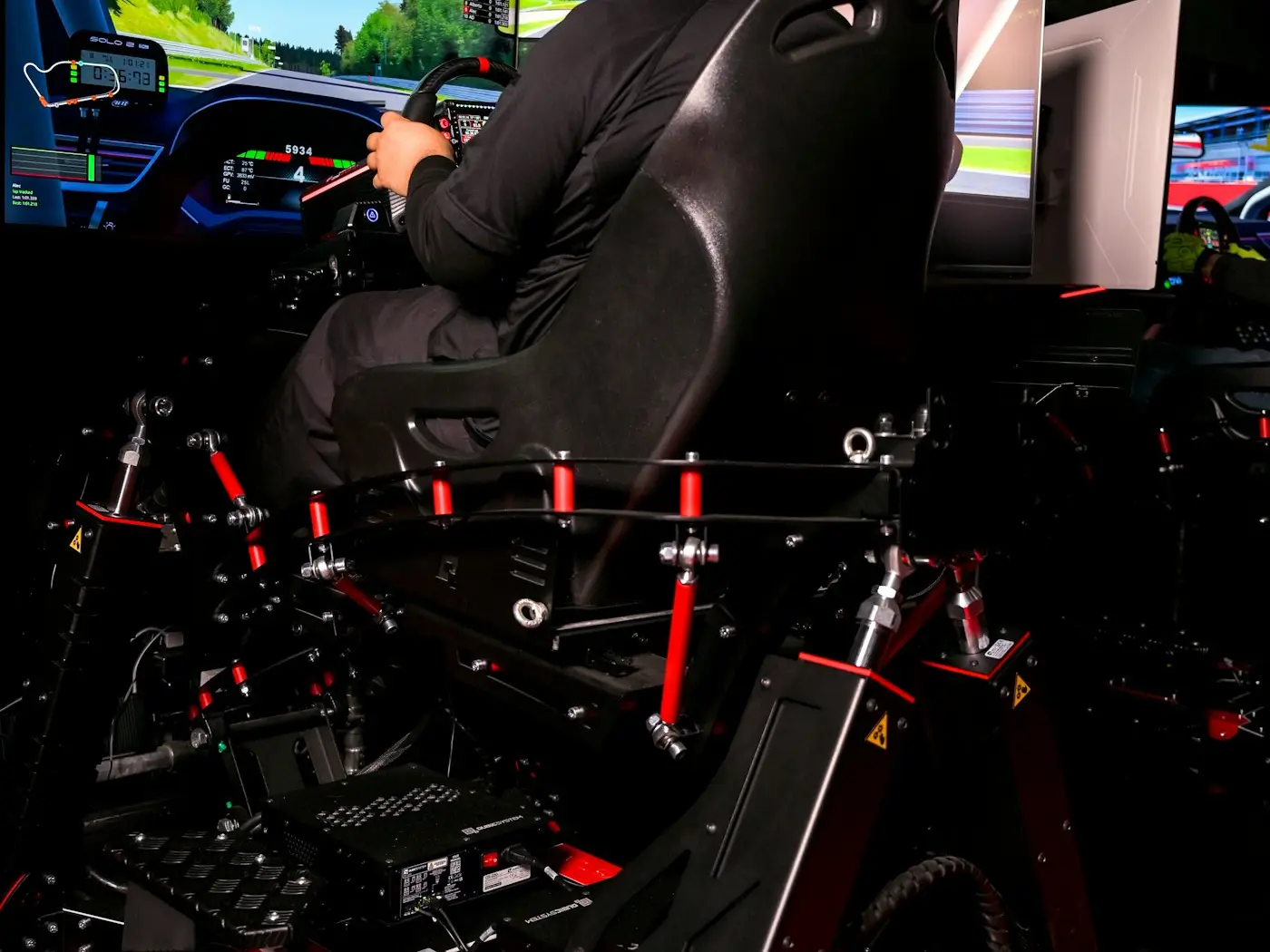
From a desk clamp to a full motion rig, we cover every step.
Browse by hardware
- Wheel bases
- The motor that creates force feedback. The biggest single upgrade you can make.
- Wheel rims
- Round, GT and formula rims, buttons, paddles and quick-release systems.
- Pedals
- Where lap time actually comes from. A load cell brake is the upgrade most worth paying for.
- Rigs and seats
- Wheel stands, cockpits and aluminium profile rigs that stay solid under torque.
- Displays and VR
- Single, ultrawide, triple screens and headsets, plus the right field of view.
- PCs and dashboards
- GPUs for triples and VR, plus shift lights, button boxes and telemetry screens.
How we recommend gear
Every recommendation on SimGearHQ is judged on how it helps you drive, not on its spec sheet. We look at the same things on every product, so you can compare them fairly.
Every guide is written by Andy Gorton, who has been sim racing since 2005 and is an ex-pro iRacing driver who raced in the Pro Series from 2017 to 2019 with a Pro licence. His own rig is a Sim-Lab P1X Pro cockpit with a Simucube 2 wheel base, Heusinkveld Pro pedals and a 49-inch curved monitor, so the advice comes from years of actual racing, not spec sheets.
- Fit: does it work with your platform, your desk or rig, and the gear you already own?
- Feel: force feedback detail, brake consistency and build quality after months of use.
- Software: setup tools, firmware support and how well it works in iRacing, ACC, LMU and F1.
- Value: what it costs against what you'd have to spend to beat it.